Why Elkins Lake Homes Face Termite Risk
Age, tree cover, and forest on nearly every side all raise termite pressure around Elkins Lake.
Established Homes From the 1970s Onward
Homes built since the neighborhood began in the early 1970s have had years for settling cracks, worn seals, and aging wood to appear. Each of these is a condition conducive to infestation. Older repairs can also leave untreated wood hidden behind newer trim. Newer neighborhoods face a different set of risks, from fresh soil to fence posts, which our licensed termite inspections for Hunters Creek homes and rentals address.
Pine, Oak, Magnolia and Dogwood Woods
Mature trees shade many lots here, keeping soil cool and damp under leaf litter and fallen branches. Stumps and buried roots give native colonies food close to the house, so stumps left after tree removal deserve a follow-up check.
Sam Houston National Forest Edge
Much of the land around Elkins Lake is National Forest and state property. Wild termite colonies live undisturbed in that woodland, and yards backing onto it often have fallen logs or brush piles close to fences and decks.
Licensed by the Texas Department of Agriculture (TDA)
Our license from the Texas Department of Agriculture’s Structural Pest Control Service covers termite work, so our inspectors can complete the Texas Official Wood Destroying Insect Report used in home sales. Buyers and lenders often ask for that report on older properties.
Local Termite Inspections in Elkins Lake
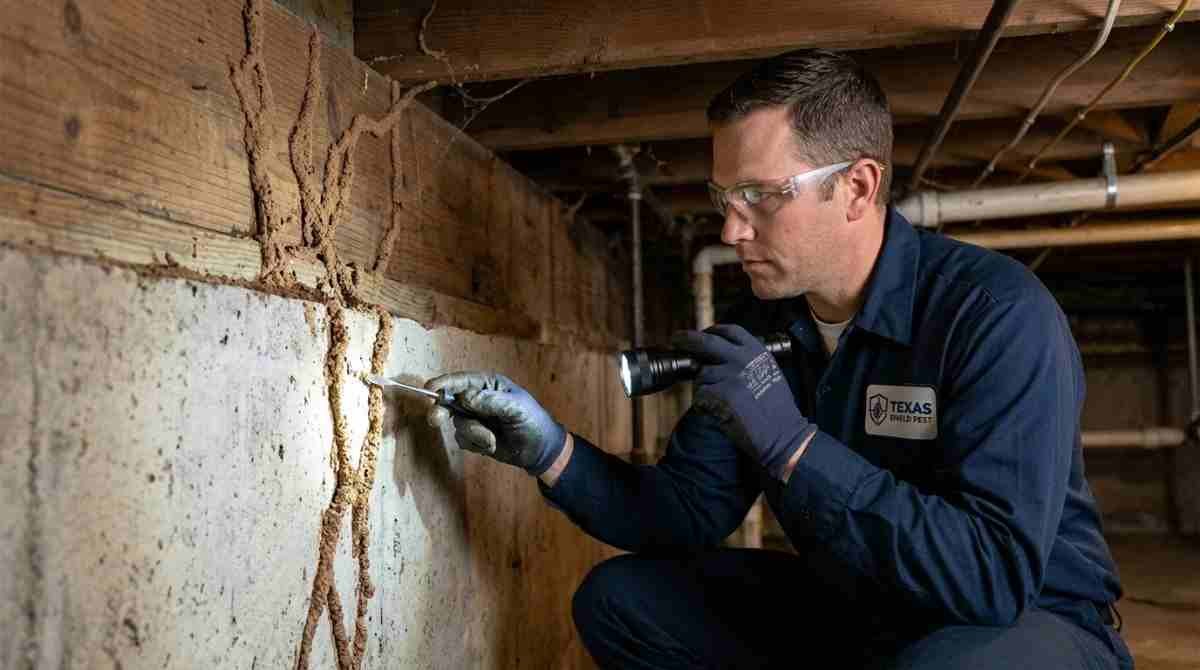
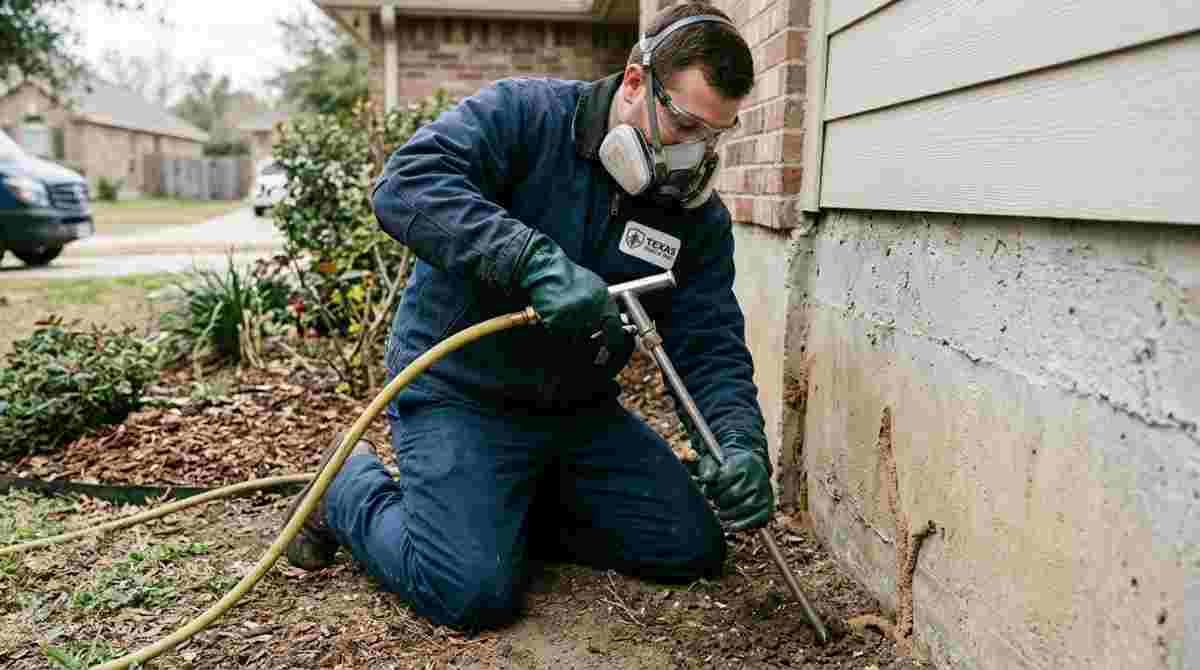
Decks get our attention first, since posts and steps often sit right on damp soil. From there, a termite inspection in Elkins Lake covers golf-side lot edges, yards backing onto forest, and any hollow-sounding wood in trim, sills, or older flooring.