Why Texas Grand Ranch Homes Face Termite Risk
Big lots, deep woods, and ongoing custom construction combine to give termites room to spread here.
Large Wooded Acreage Lots
Around two acres of trees means more stumps, fallen limbs, and leaf litter for termite colonies to live in. Clearing storm debris near buildings and keeping firewood off the ground cuts down the wood-to-ground contact termites rely on, especially near the main house.
Lots Backing to the National Forest
Sam Houston National Forest and Huntsville State Park surround the community, so many lots border land that is never cleared. Swarmers from wild colonies can reach homes every spring, often after rain, which makes the forest-facing side of each building worth checking. Lake homes surrounded by the same forest deal with shoreline moisture too, which is where our local termite protection for Wildwood Shores lake homes focuses.
New Custom Home Construction
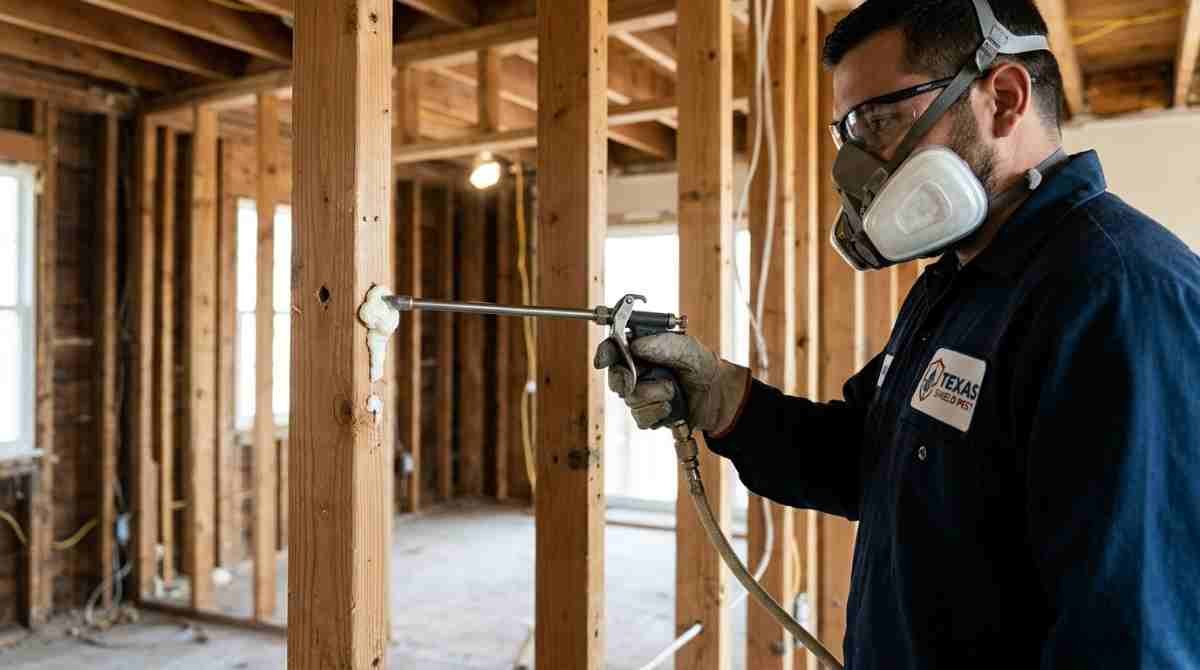
Owners pick their own builder here, so termite protection during construction depends on what you and your builder arrange. Disturbed soil, buried scrap lumber, and wood forms left near the slab can all feed a colony before the house is finished. Ask early.
Acreage owners need one licensed company that can handle the home, the outbuildings, and new construction.
Licensed by the Texas Department of Agriculture (TDA)
Certified applicators handle every pre-construction treatment and every structure we treat on your property. Our license comes from the Texas Department of Agriculture’s Structural Pest Control Service, and all termiticides we use are EPA-registered, from the slab to the farthest barn.
Local Termite Inspections in Texas Grand Ranch
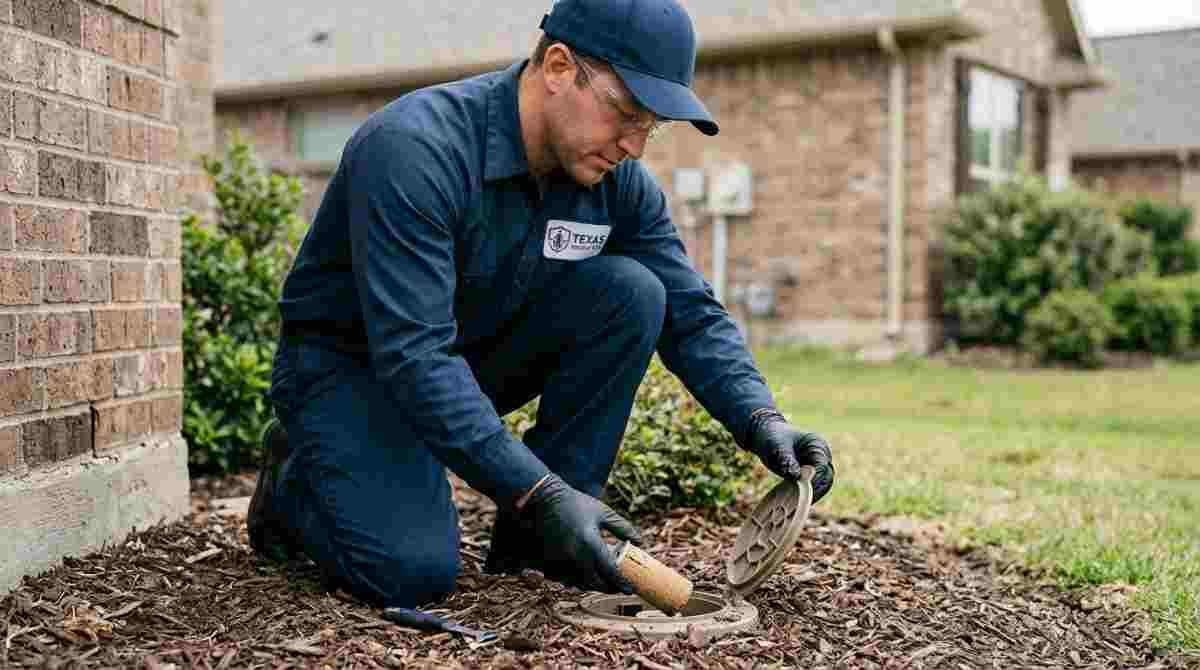
We look past the main house to every building on the land. A termite inspection in Texas Grand Ranch includes the home, barns, workshops, and sheds, plus firewood or lumber resting on soil and fence posts along the forest line.