Why Wildwood Shores Homes Face Termite Risk
Water, forest, and creek-side lots all add moisture and cover that termite colonies need to thrive.
Lake Conroe Shoreline Moisture
Waves and rain keep shoreline soil steadily damp, and wood in contact with it soaks up moisture. Bulkheads and dock connections create hidden joints where wood meets damp ground, making them common starting points for termite damage. Good drainage near the house helps.
Surrounded by Sam Houston National Forest
Sam Houston National Forest surrounds the community, so wild colonies living in logs and stumps sit just beyond many lot lines. Swarmers from those colonies can land near homes each spring, leaving discarded wings on porches, docks, and window ledges. Screens on vents and doors help keep them outside.
Big Sandy Creek and Waterfront Lots
Some waterfront lots sit along Big Sandy Creek, which flows into Lake Conroe. Creek banks hold moisture after storms. Fallen branches, driftwood, or old landscape timbers near the water also give a termite colony food within easy reach of the house.
Waterfront homes need careful product choices, and owners who visit mostly on weekends need dependable monitoring.
Licensed by the Texas Department of Agriculture (TDA)
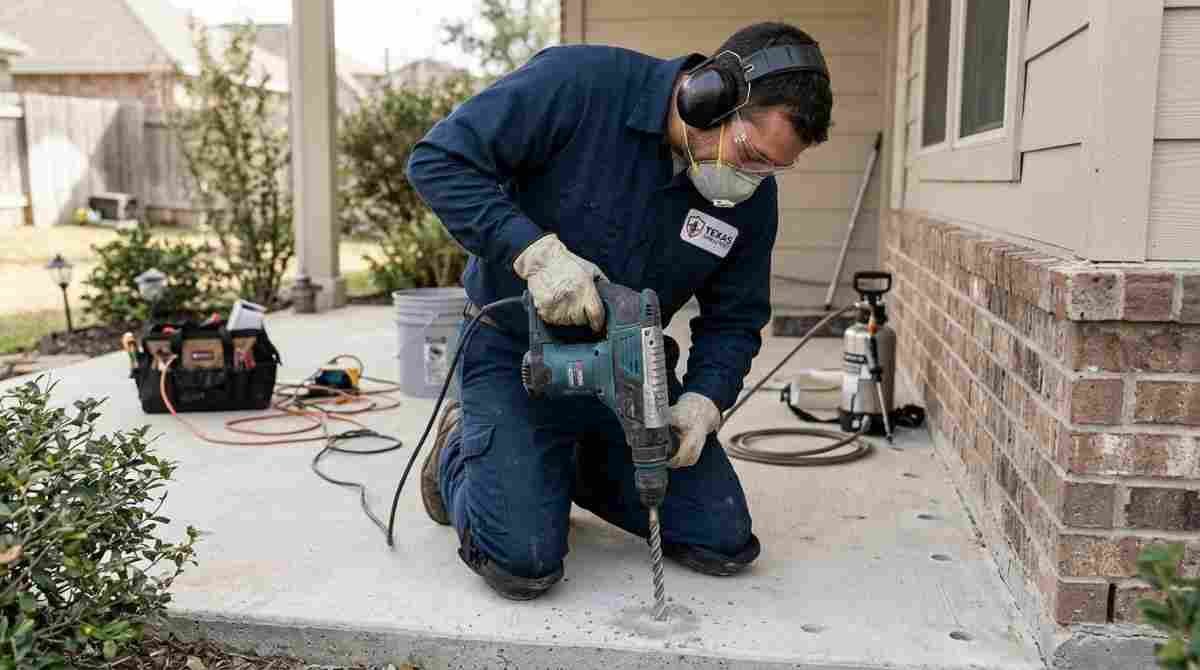
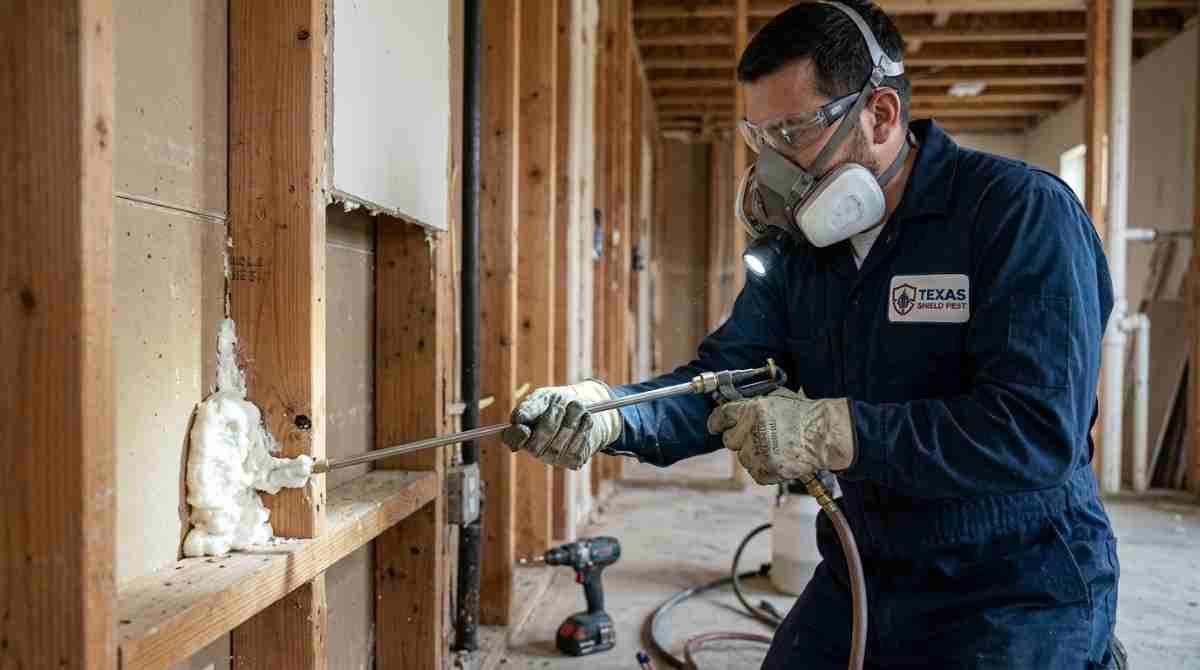
Treating near water means following each product’s label closely, including rules for use near shorelines. We hold a Texas Department of Agriculture license in the termite category through the Structural Pest Control Service, so every application meets those label requirements. That same license covers all of Texas Shield Pest’s termite protection service in Huntsville, from lakefront homes to properties in town.
Local Termite Inspections in Wildwood Shores
Inspections here begin at the dock connection and work back toward the house. A termite inspection in Wildwood Shores takes in decks, crawl areas under the home, bulkhead edges, and any wood resting on damp soil. Soft or darkened wood near the water gets probed for hidden galleries.