

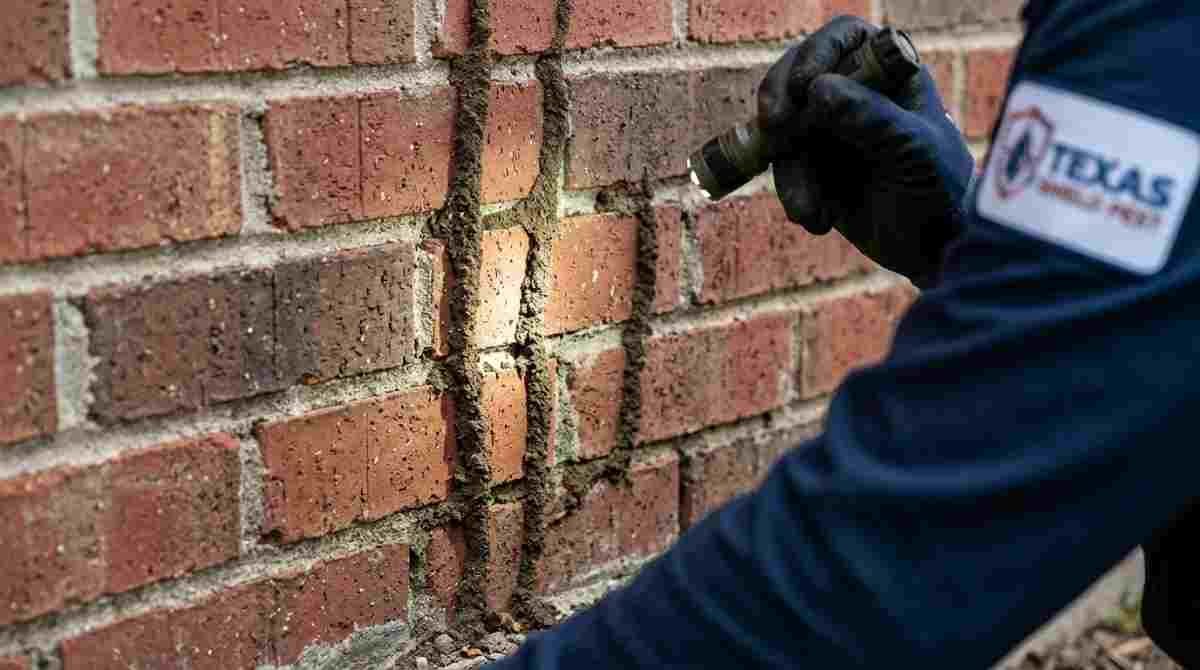
Termite mud tubes on brick are pencil-width dirt tunnels that subterranean termites build up the outside of a home to reach wood framing behind the brick veneer. For Huntsville homeowners, spotting them early on a brick exterior can stop a hidden problem before it spreads into the walls.
Can Termites Get Into a Brick Home?
Yes, termites can get into brick homes, because brick veneer is only the outer skin over a wood frame. Texas A&M AgriLife Extension says these native termites live in soil colonies and need a constant link to soil or other moisture. So workers build mud tubes to stay covered while traveling between soil and wood.
Brick doesn’t block them; it just hides their route. Termites look for any gap that leads behind the veneer, then follow it up to sill plates, studs, and trim.
That hidden path explains why brick homeowners are often surprised by damage. The outside looks solid, while the wood behind it tells a different story.
Where Mud Tubes Show Up on Brick Exteriors
Mud tubes on brick tend to appear in a few predictable spots near ground level.
Weep Holes and the Brick Ledge
Weep holes are small gaps in the bottom row of brick that let moisture drain from behind the veneer. Termites can use them as doorways, and tubes sometimes run from the soil straight into these openings.
The brick ledge, where the bottom course sits on the slab, is another common route. Check this line closely, especially where soil or mulch has built up against it.
Mortar Cracks and Expansion Joints
Termites don’t eat mortar, but they use cracks and gaps in it to get behind the brick. Hairline cracks from foundation movement and gaps at expansion joints give them sheltered paths upward.
Look for thin, earthen lines filling a crack or running beside a joint. Tubes in these spots are easy to miss because they blend with the mortar color.
Where Brick Meets the Slab or Porch
Slab edges, porch steps, and patio joints create seams where termites can slip between masonry and soil. Attached porches are frequent trouble spots, because the fill dirt under them often sits close to framing.
Check corners where a porch slab meets the house wall. Tubes there may climb only a few inches before disappearing behind brick or trim.
Is It a Termite Tube? How to Tell on Brick
A termite tube is a brownish, pencil-width tunnel of soil and debris that runs from the ground toward wood, usually in a fairly straight line.
| Feature | Termite Mud Tube | Mud Dauber Nest | Soil Splash |
| Shape | Long, narrow tunnel | Short, chunky cells or rows of tubes | Flat smear with no tunnel |
| Location | Starts at soil and climbs toward wood or gaps | Often under eaves or in sheltered high spots | Low on the wall after rain |
| Inside | Hollow, may hold small cream-colored workers | Cells may hold spiders or wasp larvae | Solid dirt |
| Connection | Links the ground to the structure | Not connected to soil | Not connected to anything |
To check for activity, you can break a tiny section and look again a few days later, since termites usually repair working tubes. Even so, leave most of the tube intact for the inspector, who uses it to trace the entry point.
Keeping Termites Off Brick Foundations
A few habits make brick foundations far less inviting:
- Keep mulch and soil below the slab edge so the brick ledge stays visible
- Point downspouts away from the foundation
- Fix leaking faucets and AC drain lines near the walls
- Trim shrubs so air and light reach the lower brick courses
- Use screens or covers made for weep holes instead of sealing them
- Remove wood debris, firewood, and old form boards near the house
Prevention lowers the risk, but it doesn’t treat an existing colony. Applying EPA-registered termiticides is work for a licensed applicator, so if tubes appear, ask for a free termite inspection and let a pro trace where they lead.
Brick Homes in Huntsville, TX: Why Local Builds Are at Risk
Many brick homes around Huntsville sit on slab foundations in wooded Piney Woods lots, where shade and leaf litter keep soil damp beside the walls. That moisture is exactly what subterranean termites need to keep their tubes active.
Houses close to Sam Houston National Forest and lake neighborhoods like Spring Lake often have mature trees, irrigation, and landscape beds pressed against the brick. Each one hides the ledge and gives termites cover.
Native subterranean termites in this area swarm in daylight, mainly in spring and frequently after a rain. Finding swarmers or wings near a brick wall is a strong hint that tubes are close by.
When to Call a Termite Professional About Mud Tubes
Get a termite professional out once you find a tube on brick, even if it looks old. Inspectors check whether it’s active, follow it to the entry point, and look inside for damage you can’t see from outside.
Our subterranean termite control service could then suggest a liquid barrier, bait stations, or both, depending on the home’s layout. For brick homes, treatment often focuses on the slab edge, porches, and plumbing penetrations.
A local termite exterminator in Huntsville can also set up annual termite inspections, so new tubes get caught early.
Brick Home Mud Tube FAQs
Should I seal brick weep holes to keep termites out?
No. Weep holes let moisture drain, so sealing them can trap water behind the brick. Use screens or covers made for weep holes, and ask a professional which type fits.
Can termites tunnel through mortar?
Not really. Termites don’t eat mortar, but they squeeze through cracks and gaps in it to reach wood behind the brick.
Do mud tubes on brick mean termites are already inside the walls?
Not always, but it’s possible. Tubes show termites were heading toward wood, so a licensed inspection is the only way to know how far they got.
Get Your Brick Home Checked for Termites
Termite mud tubes on brick are one of the clearest early warnings you can spot from the yard. A quick walk around the foundation every few months keeps that warning in view.
When you find one, schedule a free inspection to see where it leads and what’s happening behind the veneer.