

Termite pre-treatment for new construction in Texas protects a home from below before the slab is poured, when soil and framing are easiest to reach. For Huntsville builders working wooded Piney Woods lots, planning that step early avoids costly fixes and gives buyers clear paperwork at closing.
Why Termite Protection Starts Before the Foundation Is Poured
Protection starts before the pour because the soil under a slab can’t be reached evenly once concrete covers it. According to Texas A&M AgriLife Extension, native subterranean termites nest in the soil and must keep contact with soil or another moisture source. As a result, the ground beneath and around the foundation is where their trip toward the framing begins.
After the pour, technicians can still treat, but they work along the edges or drill through concrete and flooring. Treating open soil first is simpler, and it lets the builder hand the buyer a clean record from day one.
Paperwork starts early too. Texas Department of Agriculture rule 4 Tex. Admin. Code §7.174 requires the company doing a pre-construction subterranean termite treatment to give the contractor or purchaser the “Proper Pre-Construction Subterranean Termite Treatments” guide before treatment begins.
Pre-Construction Treatment Options for Builders
Builders usually choose from three approaches, and many projects combine two of them.
Soil Treatment Before the Slab Pour
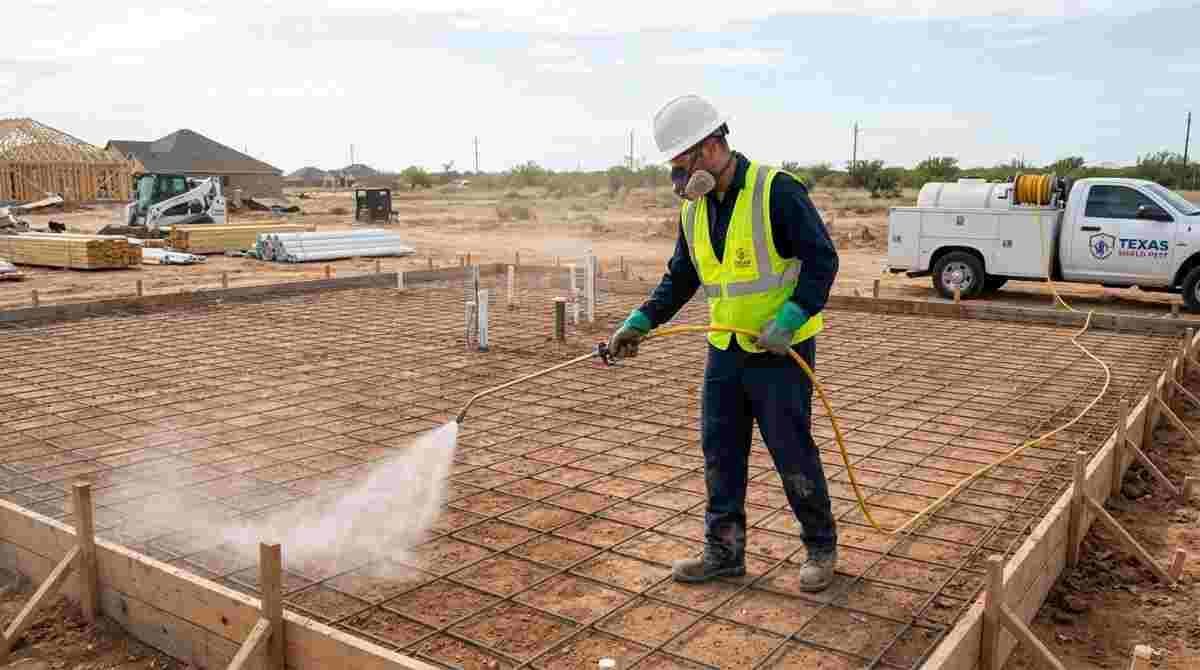
A pre-construction soil treatment applies an EPA-registered termiticide to the graded pad before the vapor barrier and concrete go down. Timing matters, because digging after treatment can break the treated layer.
Plumbing and utility penetrations need extra attention, since pipes passing through the slab leave natural gaps. A licensed applicator coordinates with the plumber and the concrete crew, so treatment happens after rough-in but before the pour.
Borate Treatment on Framing Lumber
Borate wood treatment goes on framing lumber, usually after the frame is up and before insulation and drywall close the walls. It soaks into the wood surface and makes the wood unappealing to termites that try to feed.
Borates protect the wood itself, not the soil, so they pair well with a soil treatment or bait system. Because borate is water-soluble, applicators time the job for when the structure is dried in.
Bait Systems After Construction
Termite bait systems go in after final grading and landscaping, with stations set in the soil around the finished home. Workers feed on the bait and share it, which can reduce or eliminate the colony over time.
Baits need ongoing monitoring, so they suit owners who plan for annual termite inspections. Some builders use a bait system as the main protection, while others add it as a backup to soil treatment.
Termite Steps on a Typical Build Timeline
Termite protection fits into a normal build schedule at a few clear points:
- Lot clearing: remove stumps, roots, and buried wood from the building pad
- Final grade: treat the soil once the pad is set and plumbing is roughed in
- Before the pour: re-treat any soil disturbed by forming or trenching
- Framing: apply borate to lumber before the walls are closed
- Landscaping: keep beds and mulch below the slab edge, and install bait stations if planned
- Closing: hand the buyer treatment records and the pre-construction guide
Rain and trade delays around Huntsville can shift treatment windows, so coordinate each step with the general contractor’s schedule. Check local code and lender rules as well, since requirements vary by jurisdiction and loan type. If your next start is coming up, ask for a free lot review so treatment timing is set before the pad is built.
Job-Site Mistakes That Invite Termites
Most job-site mistakes leave wood or moisture right where termites start looking. Buried form boards, wood scraps in backfill, and stakes left in the ground give a colony an easy first meal next to the slab.
Grading and drainage errors cause trouble too. Soil sloping toward the foundation, downspouts that empty beside the slab, and flower beds built above the slab edge keep the ground damp and hide termite activity.
Last, watch for damage to treated soil. Late trenching for utilities, irrigation lines, or fence posts can open gaps, and nobody notices until termites find them.
Building in Huntsville, TX: Wooded Lots, Sandy Soil, and New Subdivisions
Building in the Piney Woods means clearing land that termites already use. Lots around Huntsville near Sam Houston National Forest often hold stumps, buried roots, and fallen logs, and each one can support a colony after the house goes up.
Soil type changes the details. Where a lot has sandy soil, surface water drains quickly but can still collect under slabs and along the foundation, so drainage design matters as much as treatment. Many area builds also use raised pier-and-beam foundations, which need clear access and good airflow for future inspections.
New subdivisions like Texas Grand Ranch tend to pair large wooded lots with fresh construction. Coordinating termite plans across several homes at once keeps treatment timing consistent and records easy to track.
When Builders Should Call a Termite Professional
Builders should call a termite professional during planning, not after the slab is poured. Early contact lets the applicator schedule soil treatment around plumbing rough-in and the concrete pour.
Call again if anything disturbs treated soil, if stumps turn up during excavation, or if a buyer requests an inspection before the final walk-through. Our subterranean termite control service handles pre-construction soil treatment, bait systems, and the records buyers and lenders ask for.
Partnering with Texas Shield Pest also means one licensed team can follow a home from slab to closing. After that, annual termite inspections are available to the new owner.
Builder Termite FAQs
Does treated lumber stop termites on its own?
No. Pressure-treated lumber resists termite feeding, but termites can build mud tubes over it to reach untreated wood. It works best alongside soil treatment or baits.
What happens if the treated soil is disturbed after the pour?
Disturbed soil can leave a gap termites may use. Tell your applicator right away so they can re-treat that spot and update the treatment records.
Should a new home get a termite inspection before closing?
Yes, many builders and buyers find it worthwhile. A licensed inspection confirms nothing was missed and documents conducive conditions, like mulch against the slab, before move-in.
Plan Termite Protection Into Your Next Huntsville Build
Termite pre-treatment for new construction in Texas works best as a scheduled trade, just like plumbing or electrical. Plan soil treatment before the pour, borate on the framing, and baits or inspections once the home is finished.
Builders who want treatment timing settled before ground breaks can request a free plan review from our team. Then every home leaves your crew with clear termite records. Plan termite protection into your next build with Texas Shield Pest, from soil treatment before the pour to records at closing.