

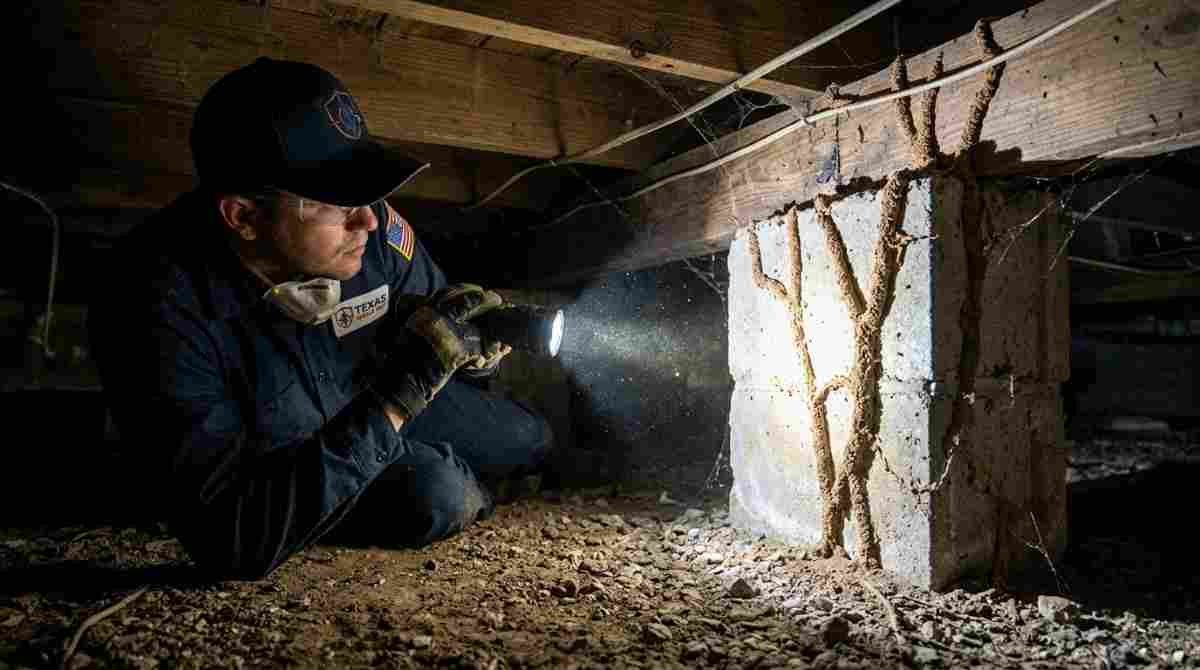
Mud tubes in crawl space areas mean subterranean termites are traveling from the soil to your home’s wooden floor system, and some may already be feeding. In Huntsville, where many older and lake homes sit on pier-and-beam foundations, these tubes are often the first visible clue.
What Mud Tubes in a Crawl Space Tell You
Crawl space tubes tell you termites found a route from soil to wood and are using it now or used it before. Per Texas A&M AgriLife Extension, subterranean termites native to Texas depend on a steady connection to the ground or another water source, so tubes act as their covered highways.
A fresh, moist tube suggests current activity, while a dry, crumbling one may be old. Either way, the tube marks a spot worth a closer look at the wood above it.
Tubes also hint at scale. Several tubes on different piers usually point to a more established colony than one short tube does.
The Kinds of Mud Tubes You May Find Under a House
Crawl space tubes come in three main kinds, and each one says something different.
| Tube Type | What It Looks Like | What It Usually Means |
| Working (exploratory) tube | Runs up a pier or wall from the soil; exploratory tubes may wander or branch without reaching wood | Termites are searching for food or traveling to it |
| Drop tube | Hangs down from a joist or subfloor toward the ground | Termites already in the wood are reconnecting to soil moisture |
| Swarm tube | Short and wide, often on wood or near openings | Built to release winged swarmers, usually in spring |
Drop tubes deserve special attention because they start in the wood itself. Swarm tubes, by contrast, tend to appear before or during the spring swarming season. Photos of each tube help the inspector compare activity on a later visit.
Where to Look Under a Pier-and-Beam Home
Start with spots where wood sits closest to soil or moisture under the house.
Piers, Blocks, and Shims
Concrete piers and block stacks are the main routes from ground to floor. Check each one on every side, since tubes often climb the face turned away from the access door.
Wood shims between piers and beams are easy targets. Termites can reach them through a short tube and feed on them while staying connected to the soil.
Sill Plates and Floor Joists
Sill plates and joists hold the floor up, so damage there matters most. Look for tubes along the top of the perimeter foundation, and listen for hollow-sounding wood when you tap with a screwdriver handle.
Pay attention to joists under bathrooms and kitchens. Leaks keep that wood damp, and damp wood draws termites faster.
Plumbing Penetrations and Skirting
Plumbing lines entering the floor create gaps and moisture right where termites like to travel. Tubes often follow pipes upward into the subfloor.
Skirting around the base of the house can hide tubes too. Wood skirting that touches soil gives termites a direct path, so inspectors check both sides of it. Vinyl or metal skirting can still hide tubes behind it, so access panels matter.
Crawl Space Conditions That Draw Termites
Certain crawl space conditions make termites much more likely to move in:
- Wood debris, form boards, or scrap lumber left on the soil
- Standing water or damp soil from poor drainage or plumbing leaks
- Wood skirting, steps, or posts in direct contact with soil
- Blocked or missing vents that trap humidity
- Cardboard boxes or stored items sitting on the ground
- Soil piled against piers or sill plates
The Texas Department of Agriculture’s WDI inspection standard (4 Tex. Admin. Code §7.175) lists wood debris under or around a structure among the conducive conditions inspectors record. Clearing it out is one of the easiest fixes an owner can make. If you’d rather not go under the house yourself, arrange a free termite inspection so a trained inspector can handle it.
Pier-and-Beam Homes in Huntsville, TX: Lake, Forest, and Older Home Risks
Huntsville’s mix of lake homes, wooded lots, and older houses gives pier-and-beam foundations steady termite pressure. Lakeside neighborhoods like Wildwood Shores bring higher humidity and soil that stays wet longer, which keeps crawl spaces moist.
Properties by Sam Houston National Forest add leaf litter, stumps, and shade around the foundation. Each of those keeps soil cool and damp, which suits subterranean colonies.
Older homes may also have original wood skirting, past repairs with untreated lumber, or plumbing that has leaked for years. Every one of those details gives termites another opening.
When to Call a Termite Professional for Crawl Space Tubes
Call a termite professional once you spot any tube under the house, instead of waiting for floor problems. Crawl spaces carry real hazards, including tight clearances, sharp debris, wiring, standing water, and wildlife, so don’t crawl into tight or damp spaces without proper precautions.
An inspector will check every pier, joist, and penetration, then explain what’s active. Our subterranean termite control service may recommend soil treatment around piers, termite bait systems, or a combination of both.
When choosing professional termite treatment in Huntsville, TX, ask whether the company inspects the full crawl space, not just the perimeter.
Pier-and-Beam Termite FAQs
Is it okay to knock down mud tubes in a crawl space?
Breaking a small section can show activity if termites rebuild it within days. Otherwise, leave tubes in place so the inspector can trace where termites are entering.
Can a crawl space vapor barrier help keep termites away?
Lower moisture makes the space less attractive, so it can help. Still, it won’t stop termites already present, and it shouldn’t hide piers or sill plates from inspectors.
Are pier-and-beam homes easier to treat than slab homes?
Often, yes. Open crawl spaces let technicians reach soil and wood directly, while slab homes may need drilling. Access, clearance, and moisture still affect each job.
Get Your Crawl Space Inspected for Termites
Mud tubes in crawl space areas are a clear message that termites have found your floor system. Early action protects joists and sill plates before damage spreads.
Book a free crawl space inspection and get a full picture of what’s happening under your home.