

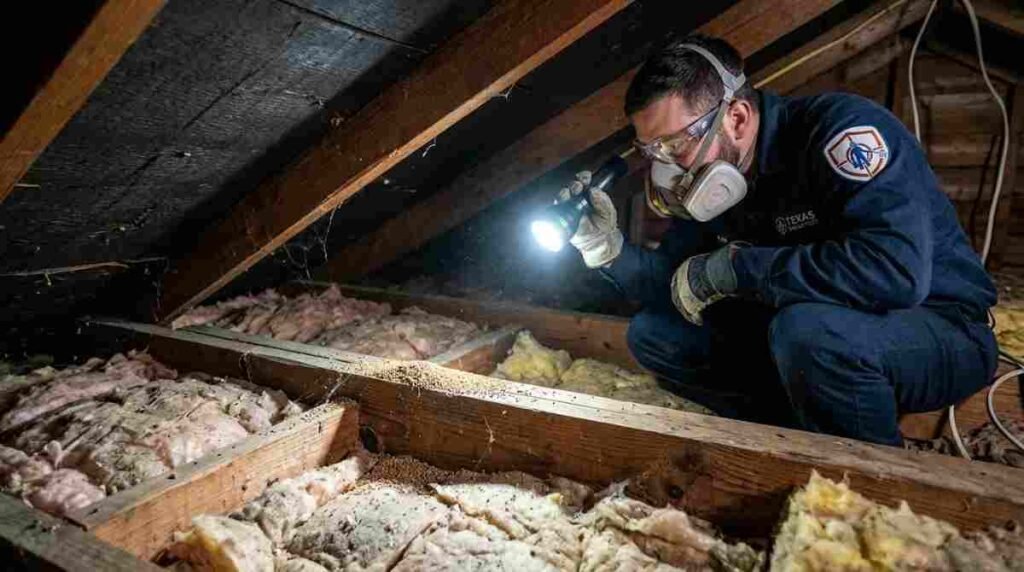
Termite frass in attic spaces usually points to drywood termites living in rafters, decking, or trim above your ceilings, since they push dry waste out of the wood. For Huntsville homeowners, finding it early helps keep a small colony from spreading through roof framing.
What Termite Frass in the Attic Usually Means
Frass in the attic usually means drywood termites are tunneling in wood overhead and clearing waste from their galleries. Texas A&M AgriLife Extension says these termites nest inside solid, dry wood above ground and don’t need the ground at all, which makes attic framing a natural fit.
Subterranean termites rarely leave loose piles like this. They work waste into mud tubes and tunnel walls instead, so dry piles on attic surfaces point more toward drywood activity.
Location still matters. Texas A&M AgriLife finds drywood termites across the state, though populations peak along the coast, so an inland attic needs a professional ID before any treatment.
Attic Signs of Drywood Termites
Watch for these attic signs of drywood termites:
- Small piles of dry, gritty frass on insulation, boards, or stored boxes
- Pinhole-sized kick-out holes in rafters or decking
- Swarmers, or wings they shed, around vents and windows
- Blistered or rippled wood surfaces on framing
- Hollow sounds when you tap rafters with a tool handle
- Frass collecting on top of stored items below beams
Texas A&M Urban Entomology points to winged swarmers as often the earliest clue of a drywood infestation, so wings near attic vents deserve attention even before frass appears. Because drywood colonies stay small compared with subterranean ones, other signs can stay subtle for a long time.
Where Drywood Termites Hide in an Attic
Drywood termites in attics favor wood that’s dry, undisturbed, and hard to see.
Rafters and Roof Decking
Rafters and the underside of roof decking offer large spans of dry wood that nobody touches. Frass often collects directly below damaged sections, on insulation or ceiling joists.
Hold a flashlight low and parallel to the wood to spot kick-out holes and surface blisters. Damage here can weaken framing over time, so note each location for your inspector.
Eaves, Soffits, and Fascia
Eaves, soffits, and fascia sit at the edge of the attic, where outside air meets wood. Swarmers can enter through gaps here, and colonies often start in exposed trim.
Check inside the eave space and along the exterior fascia. Peeling paint, holes, or frass on outdoor ledges may point to the same colony. Birds and wasps nesting in eaves leave debris too, so don’t assume every pile is frass.
Attic Vents and Gable Ends
Gable and ridge vents let in light and air, which can draw swarmers in during spring. Wood around these openings, including vent frames and gable studs, is a common starting point.
Look for wings caught in vent screens and frass on the floor beneath gable ends. Screens with gaps or tears make entry easier.
Termite Frass vs. Other Attic Debris
Attics collect plenty of debris, so compare what you find before drawing conclusions.
| Debris | Texture and Appearance | Common Source |
| Drywood termite frass | Hard, uniform grains that roll instead of smearing | Drywood termites in rafters or decking |
| Rodent droppings | Larger, dark, rod-shaped with tapered ends | Roof rats or mice in the attic |
| Insulation dust | Fine, fluffy, or fibrous | Older insulation breaking down |
| Wood shavings or sawdust | Fibrous and uneven | Past construction or carpenter ants |
Rodent droppings are the most common mix-up in attics, and they call for a different plan entirely. A trained inspector can tell them apart quickly. If you’re unsure, bag a small sample with a gloved hand and keep it for the visit.
What to Do After Finding Frass in the Attic
After finding frass, leave it in place, mark each spot with painter’s tape, take photos, and set up an inspection rather than cleaning everything up. The pile shows inspectors where to look, and fresh frass returning after a cleanup helps confirm activity.
Attics carry real hazards, including extreme heat, open gaps between joists, exposed nails, and wiring. Step only on framing, avoid hot afternoons, and let inspectors handle tight or unsafe areas.
Skip store-bought foggers and sprays, since they don’t reach termites inside wood. Our drywood termite control service may identify which termite is involved and recommend localized treatment where damage is contained. A free attic inspection is a good first step.
Huntsville, TX Attics: Heat, Humidity, and Lake Homes
Attics around Huntsville heat up fast in summer and stay humid much of the year, which can stress roof wood and open gaps around vents and trim. Those gaps give swarmers more ways in.
Lake homes in areas like Wildwood Shores often have extra eaves, decks, and trim exposed to moisture and sun. Wooded lots by Sam Houston National Forest also leave shade and leaf debris on roofs, which can keep fascia damp.
Still, drywood termites should be confirmed by a professional instead of assumed. Other pests, like roof rats or carpenter ants, leave debris that can look similar at first glance.
Attic Termite FAQs
Can termites in the attic spread to the rest of the house?
Yes, they can. These colonies may spread into connected framing, trim, or furniture over time, so an inspection should cover more than the attic.
Does attic insulation hide termite frass?
Often, yes. Frass can sink into loose insulation, so check boards, beams, and stored items where piles stay visible.
Do I need to move stored items before an attic termite inspection?
It helps to clear paths to the eaves, gable ends, and attic access. Don’t move heavy items in extreme heat; the inspector can work around what remains.
Get Your Attic Checked for Drywood Termites
Termite frass in attic spaces is easy to miss, but it’s one of the clearest clues that wood overhead needs attention. Checking carefully now keeps repairs small and protects roof framing.
For fast termite inspections in Huntsville, TX, our team checks rafters, eaves, and vents in one visit. Request a free attic inspection whenever frass or wings show up.