

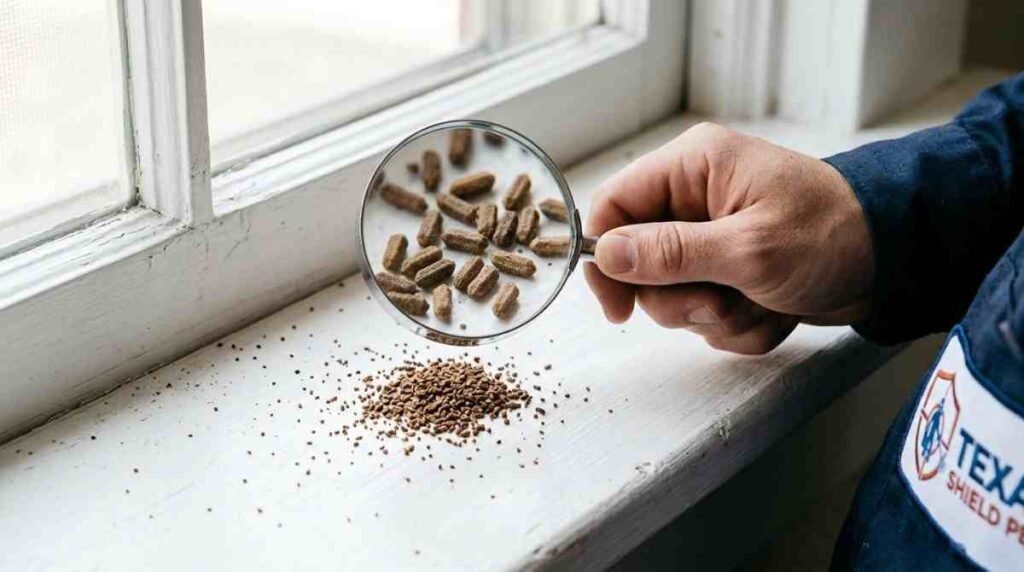
Drywood termite pellets on a windowsill usually mean a small colony is living inside nearby wood, such as the frame, sill, or trim, and pushing its waste out. In Huntsville, a careful look at the pellets and the wood around them tells you whether you’re facing termites or just everyday debris.
What Termite Pellets on a Windowsill Mean
Pellets on a windowsill mean termites inside dry wood are clearing out their tunnels. According to Texas A&M AgriLife Extension, drywood termites live in sound, dry wood above ground, need no soil contact, build no mud tubes, and push out dry fecal pellets.
Their colonies are much smaller than subterranean colonies, so one window can host a colony for a long time. Texas A&M Urban Entomology also notes that winged swarmers are usually the first sign of an infestation, so pellets often show up alongside wings.
Pellets don’t always mean termites are still active, though. Old frass can sit inside a frame for years and fall out when the window is opened or cleaned. So the pattern matters more than one pile: new grains in the same spot after cleaning tell a different story than a single dusting.
How to Identify Drywood Termite Pellets
Drywood termite pellets are tiny, hard, and have six concave sides, so they look like grains of coarse sand under magnification. Texas A&M Urban Entomology describes them as about 1/32 inch long, with lengthwise ridges along each surface.
They usually collect in small piles right below a kick-out hole, a pinhole-sized opening the termites use to push waste out. Colors vary with the wood, from light tan to dark brown, but the shape stays the same.
Press one with a fingernail. Real pellets feel hard and gritty, while dust or dirt smears easily.
Termite Pellets vs. Other Debris Around Windows
Several kinds of debris collect on windowsills, but pellets have a shape the others lack.
| Debris | What It Looks Like | Likely Source |
| Drywood termite pellets | Tiny, hard, uniform grains with six concave sides | Termites inside the frame, sill, or trim |
| Sawdust | Fluffy, uneven fibers | Sanding, drilling, or carpenter bees |
| Carpenter ant debris | Coarse shavings mixed with insect parts | Ants nesting in damp wood |
| Dirt or grit | Soft, irregular, smears when rubbed | Wind, open windows, or potted plants |
Uniform shape is the giveaway. If the grains all look alike and keep coming back to the same spot, termites are the likely source. A cheap magnifying glass or a phone camera on zoom makes the shape easy to see.
Where the Pellets Are Coming From
Pellets on the sill usually come from wood directly above or beside where they land.
Window Frames and Sills
The sill and lower frame are the most common sources, because pellets drop straight onto the flat surface. Look for tiny round holes, blistered paint, or wood that sounds hollow when tapped.
Pellets that return after you sweep point to an active colony right there. Mark the spot with tape so you can check it again in a week.
Wood Trim and Casing Above the Window
Casing and header trim above the window can also drop pellets onto the sill below. Check the top edge and corners, where termites often enter through joints and nail holes.
A thin line of pellets along the wall below the casing is another clue. It shows the waste is falling from higher up, not from the sill.
Exterior Fascia and Siding Near the Window
Outside, fascia boards and wood siding near the window can hold drywood colonies too. Pellets from those spots may blow or fall onto exterior sills and ledges.
Look for small piles on brick ledges, porch rails, or the ground under the window. Damaged siding or fascia can also let a colony reach the frame from outside.
What to Do After You Find Termite Pellets
After finding pellets, take these steps before anything gets cleaned away:
- Take clear photos of the pellets and the wood above them
- Save a small sample in a sealed bag for identification
- Sweep the sill clean and check for new pellets in a week
- Watch for winged swarmers or wings nearby, especially in warm months
- Avoid spraying store-bought products into holes or cracks
- Set up a professional inspection to confirm the source
Treatment depends on how far the colony has spread. Our drywood termite control service can use localized drywood wood treatment for small, contained areas once the source is confirmed. If pellets keep returning, a free inspection can pinpoint exactly where they start.
Older Homes in Huntsville, TX: Why Windows Get Hit
Older homes often have original wood windows, paint-sealed frames, and joints that have opened with age, which give drywood termites easy entry points. Repainting over damaged wood can also hide kick-out holes for years.
Lake homes in neighborhoods like Spring Lake add humidity, shade, and wood trim exposed to weather. Used furniture and antique pieces moved into older houses can also carry drywood colonies, since these termites need no soil contact.
Even so, Texas A&M AgriLife reports drywood termites throughout Texas, with the highest concentrations along the coast. So in Huntsville, confirm the pest before assuming drywood termites rather than another insect.
Windowsill Pellet FAQs
Do new pellets mean the termites are still active?
Usually, yes. Fresh pellets that return after cleaning suggest an active colony, while old pellets can fall from past activity. An inspector can confirm which you have.
Will replacing the window get rid of drywood termites?
Only if every infested piece goes with it. Colonies can extend into framing, trim, or nearby siding, so confirm the source before replacing anything.
How long does it take drywood termites to damage a window frame?
There’s no set timeline. These colonies grow slowly, so damage builds over time, which makes early detection worth the effort.
Get Your Windows and Trim Checked for Drywood Termites
Drywood termite pellets on a windowsill are worth a closer look, even if the window seems solid. Fast identification separates an active colony from old debris and keeps repairs small.
Licensed termite inspectors in Huntsville, TX can check frames, trim, and siding in one visit, so book a free inspection when the pellets keep coming back.