
Termite damage in a Texas rental usually falls to the landlord, and the Texas Property Code sets repair duties for conditions that affect tenant health or safety. For Huntsville landlords with student and family rentals, catching termite damage in rental property early protects the building, the tenant relationship, and your records.
Who Handles Termites in a Texas Rental: Landlord or Tenant?
In most cases, the landlord inspects and repairs termite damage, while the tenant’s job is to report what they see. Under Texas Property Code §92.052, a landlord must make a diligent effort to repair a condition that materially affects the physical health or safety of an ordinary tenant after the tenant gives notice.
Termite damage that weakens floors, stairs, or framing can reach that level, while cosmetic damage may not. Conditions caused by the tenant are treated differently under the same section. Many landlords keep termite inspections and structural repairs on their side of the lease, so check what yours says.
The lease matters in another way too. Under §92.056, the lease must tell the tenant about repair remedies in bold or underlined text. None of this is legal advice; it’s general background only, so for a specific dispute, review your lease and consult a Texas attorney.
Why Rental Homes Often Hide Termite Damage Longer
Rentals hide termite damage longer because owners rarely see the inside of the house between tenants. Tenants may not recognize tubes or shed wings, or they may not want to bother the landlord over small signs.
Furniture and stored boxes also cover baseboards and walls where early signs appear. Plus, turnover periods are short, so inspections often get rushed in favor of paint and cleaning. Small leaks that tenants never report can also keep wood damp under sinks and tubs for months.
Termite Signs to Check During Every Rental Turnover
Use every turnover to walk the unit with termite signs in mind:
- Mud tubes on foundation walls, in the garage, or under sinks
- Discarded wings on windowsills or near light fixtures
- Small piles of dry pellets below wood trim or furniture
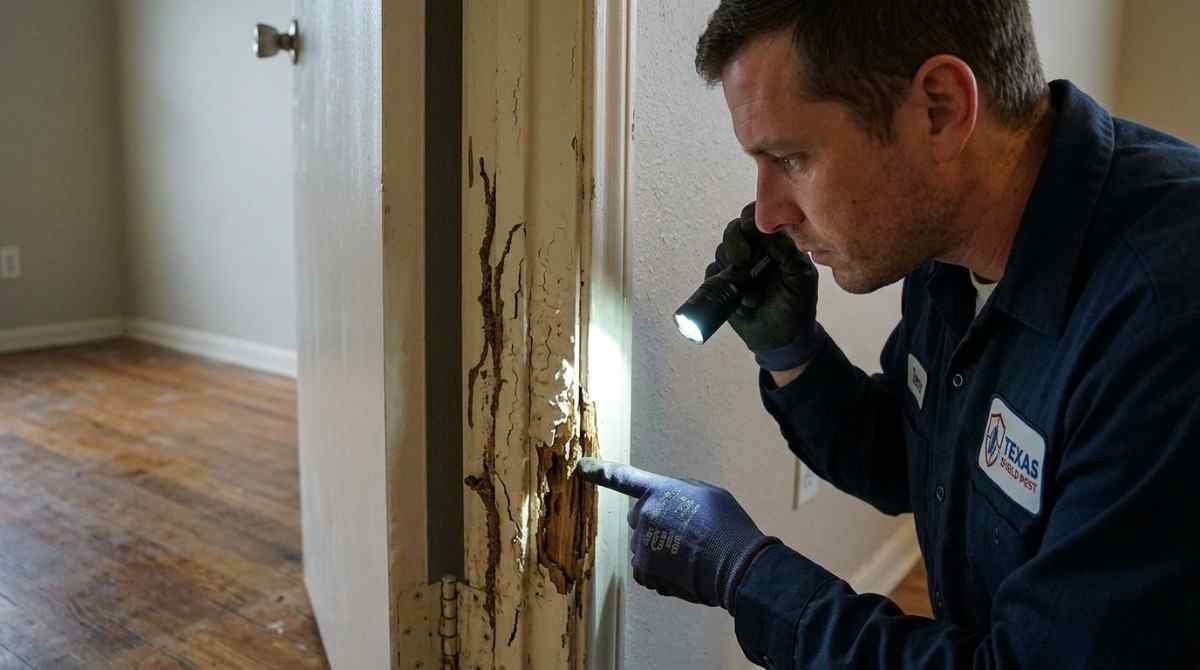
- Hollow-sounding wood or bubbling paint on baseboards and door frames
- Soft spots in floors, especially near bathrooms and kitchens
- Wood-to-ground contact at decks, steps, or fences
Write down what you find and date it. Those notes become useful records if repairs or questions come up later, and photos of each spot make comparisons easy at the next turnover.
Handling Termite Treatment With Tenants in Place
Treating an occupied rental works best with planning, clear communication with tenants, and good paperwork.
Notice and Access Before Treatment
Give tenants advance notice and a clear time window before any inspection or treatment, following the entry terms in your lease. Explain what the visit involves, how long it should take, and whether anyone needs to step out.
Tenants cooperate better when they understand the reason. A short note that names the problem and the company doing the work prevents confusion on treatment day.
Preparing the Unit and Tenant Belongings
The treating company will give prep instructions, and landlords should pass them along in writing. Typical requests include clearing items from under sinks, moving furniture away from walls, and keeping pets out of work areas.
For drywood termites in furniture or trim, the plan may call for localized drywood wood treatment rather than whole-house work. Our drywood termite control service explains any prep needed before the technician arrives.
Keeping Treatment and Repair Records
Keep every inspection report, treatment record, invoice, and tenant notice in one file per property. Those records show you responded after notice, and they help when the property sells.
Also log the date of each tenant report and your response. Clear timelines matter if anyone later questions how a repair was handled.
Huntsville Rentals Near Sam Houston State University: Local Termite Risks
Huntsville rentals near Sam Houston State University face steady turnover, older housing, and wooded lots, which together give termites time to work unnoticed. Many student homes are built on raised pier-and-beam floors, with crawl spaces nobody checks between leases.
Furniture moves in and out constantly as well. Used couches, dressers, and bed frames can carry drywood termites, though Texas A&M AgriLife finds them most concentrated near the Gulf Coast rather than inland.
Established neighborhoods such as Hunters Creek add mature trees, stumps, and shade that hold moisture in the soil. Subterranean termites thrive in those conditions, so yard checks belong in every turnover too.
When a Landlord Should Call a Termite Professional
Bring in a licensed pro as soon as a tenant reports signs, or when a turnover walk-through finds tubes, wings, pellets, or damaged wood. Fast action limits repairs and shows diligence after notice.
A yearly inspection schedule helps owners with several units. Working with a reliable termite company in Huntsville that documents every visit keeps records consistent across properties, and a free inspection between tenants gives you a clean baseline while access is easy.
Landlord Termite FAQs
Can a tenant break a lease over termites in Texas?
It depends. Under Texas Property Code §92.056, termination requires specific steps, including proper notice and time to repair, and the damage must materially affect health or safety. Check your lease and a Texas attorney.
Can used furniture bring termites into a rental?
Yes, it can. Used furniture can carry drywood termites, which live inside dry wood and need no soil contact. Check wood pieces for small pellets or holes before they come inside.
Does landlord insurance cover termite damage?
Often not. Many policies exclude termite damage, but terms vary, so check your own policy and ask your agent what is and isn’t covered.
Protect Your Huntsville Rental Property From Termites
Regular checks, quick responses to tenant reports, and organized records protect both the building and your standing as a landlord. Termite damage in rental property is easier to manage when you catch it between tenants instead of in the middle of a lease.
Set up a free inspection at your next turnover, and you’ll have a clear starting record for every unit.